
News
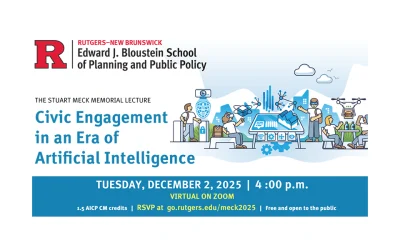
Civic Engagement in an Era of Artificial Intelligence
This talk draws on Dr. Renee Sieber’s research at the intersection of tech and civic engagement.
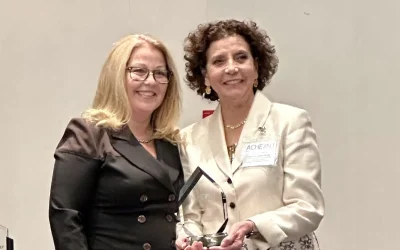
Ceu Cirne-Neves, MPA, FACHE Receives Lifetime Achievement Award
The Bloustein School is proud to share that colleague Céu Cirne-Neves, MPA, FACHE has been honored with the inaugural Lifetime Achievement Award from the American College of Healthcare Executives New Jersey Chapter (ACHE-NJ). The award was presented at the chapter’s Annual Meeting and Awards Ceremony on December 4, 2025, at the Hyatt Regency in New Brunswick.
Stamato Commentary: N.J. GOP foes of Obamacare are pushing to save it? What’s up with that?
Healthcare-related challenges, on several fronts, are putting families in crisis. And, the Republican-dominated Congress, well, it’s having little, if anything to say but, for those who face re-election, saying what may be needed to stay seated.

Pfeiffer Opinion: N.J.’s public media lifeline is about to snap — will Murphy and Sherrill let it?
Marc Pfeiffer Opinion: We need an independent assessment of available resources to inform how we deliver public media services most effectively.
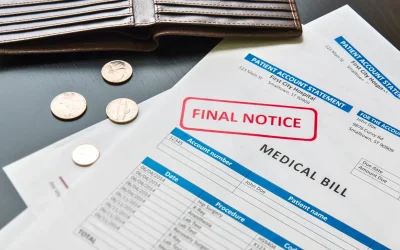
NJSPL: The Healthcare Affordability Crisis in NJ and Nationally
Nationally, and in New Jersey, healthcare spending accounts for 1 in 5 dollars of gross domestic product, with hospital care representing the largest category of healthcare spending. In order to address this ongoing affordability crisis, researchers recommend that the incoming gubernatorial administration continue to build on the work of the New Jersey Health Care Afforability, Responsibility, and Transparency (HART) Program.

Charter schools proposed as solution to New Jersey’s segregation crisis
Expect “huge political pushback,” says Rutgers education policy expert Julia Sass Rubin, who co-founded a grassroots group that opposes the expansion of charter schools without approval from the local school board and voters. Former Republican Gov. Chris Christie expanded charters dramatically in Newark and Camden but was blocked from a similar push in the suburbs.

Wolff and Lewis Pen Chapter on PSD and Trauma-Informed Care
This chapter provides a blueprint that recognizes the reluctance of the correctional system to address trauma, the lack of funding and staffing expertise to support and sustain a therapeutically sensible response to trauma, and the superseding public health imperative to treat and rehabilitate trauma in cost-effective ways.

EJB Talks: Alumnus Helps Rethink Jersey City’s Public Spaces
Dean Stuart Shapiro talks to alumnus Barkha Patel, MCRP ’15 this week on EJB Talks. She reflects on how the planning school fundamentals and communication skills she learned still form the basis for her work, and concludes with encouraging emerging planners to adopt an action-oriented mindset by becoming a person who figures things out and gets things done, even when they feel out of their depth.
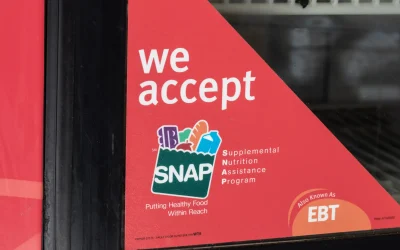
New work requirements for SNAP recipients take effect
“Many individuals would prefer to be working,” Hetling said in an interview with NJ Spotlight News. “Often they’re experiencing some type of challenge, whether that’s kind of a long-lived or a short-lived one, that prevents them from fully engaging in the labor market right now.”

NJSPL Report: Equity Initiatives in the United States
In New Jersey, the state government proactively advances equity through the Office of Equity within the Office of the Governor, as well as through various programs and budget initiatives intended to support New Jerseyans. To enhance these efforts, researchers recommend incorporating equity measures into department/agency performance assessments to ensure equity is engrained within the ongoing routines of the government.

TECH UPDATES: Essential Technology Questions (and Answers) for Decision-Makers
Marc Pfeiffer discusses practical technology guidance to improve digital services, manage IT infrastructure, comply with regulations, and adopt emerging technologies responsibly.
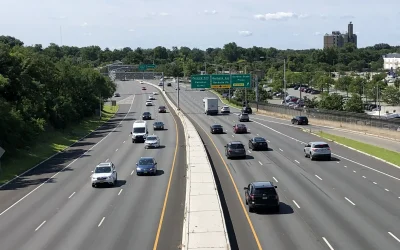
Decision on major contract for Route 17 project shrouded in mystery
“We are a political machine state. Our citizens pay a corruption tax because when there is a lack of transparency and accountability it encourages, it opens the path to potential corruption and that is expensive for people,” Sass Rubin said.