
On March 2, 2022, Bloustein Enthusiasts and Advocates for Transportation (BEAT) welcomed Bill Moyer, Director of Solutionary Rail, to speak about his role advocating for electrifying America’s railroads.
The focus on rail as a solution for moving freight grew out of activism to limit fossil fuels in the Pacific Northwest. Once a heavy rail user, the U.S. transitioned to heavy trucks to move goods around the country. Moyer sees rail as a “solution in plain sight.”
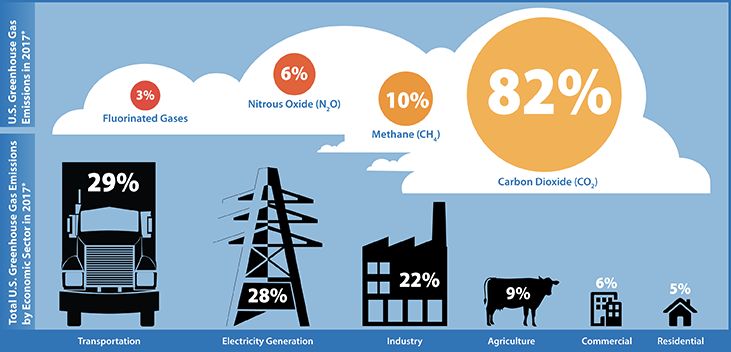
In 2017, transportation was responsible for 29% of emissions in the U.S. Trains use 1/3 the energy required by cars and trucks. In addition, fewer trucks would mean less wear and tear on roads and bridges, fewer motorist-truck accidents, and improvements in both water and air quality.
In Solutionary Rail’s Moonshot Modeshift Brief, they proposed targets of 50% of freight traveling 100-249 miles, 75% traveling 250-499 miles, and 100% of freight traveling over 500 miles be moved to rail. To reach this goal, trains would need to be able to access ports and hubs more efficiently through on-dock rail, roll-on, roll-off (“Ro-Ro”) solutions to transport trucks via rail, and installation of more short lines directly into industrial centers.
The second part of Moyer’s talk focused on moving as much rail as possible to electric sources. Electricity can be generated from renewable sources and is less expensive than diesel fuel. Electric locomotives are cheaper to maintain, incorporate regenerative braking, and add capacity through more rapid acceleration and deceleration. In the U.S., only 1% of railways are electrified, compared with up to 64% in Europe.
From a public health perspective, Moyer noted that limiting diesel emissions could make a considerable impact on health outcomes, citing the San Bernadino railyard–a cancer hotspot due to idling diesel trains and trucks.
He explained a variety of different solutions for rail electrification including battery-electric-hybrid models as well as the more traditional catenary models (overhead wires) installed either on the trains or on towers. Electrifying existing rail lines would make the most sense. There are even specialty trains that could install the electrification towers as they move down the tracks (illustration above, top image). Potential benefits include reaching rural communities that exist along previously abandoned rail lines.
The Interstate Commerce Act of 1887 allowed the Interstate Commerce Commission (ICC) to set rates and strictly uphold public interest as the main driver of rail commerce. The 1980 Staggers Act dismantled the Common Carrier Obligations (CCOs) for rail companies. Globalization and deregulation helped to shape current rail use. Today, rail companies operate on the idea of Precision Scheduled Railroading (PSR), which Moyer describes as a business model to make more by doing less.
He argues that the public interest is truly served when interstate rail carries 100% of truck freight now moving over 500 miles.