
by Zoe Linder-Baptie MPP/MCRP ’18
The Ruth Ellen Steinman and Edward J. Bloustein Memorial Lecture was established to celebrate the values and interests the Bloustein’s cherished and cultivated throughout their lives.
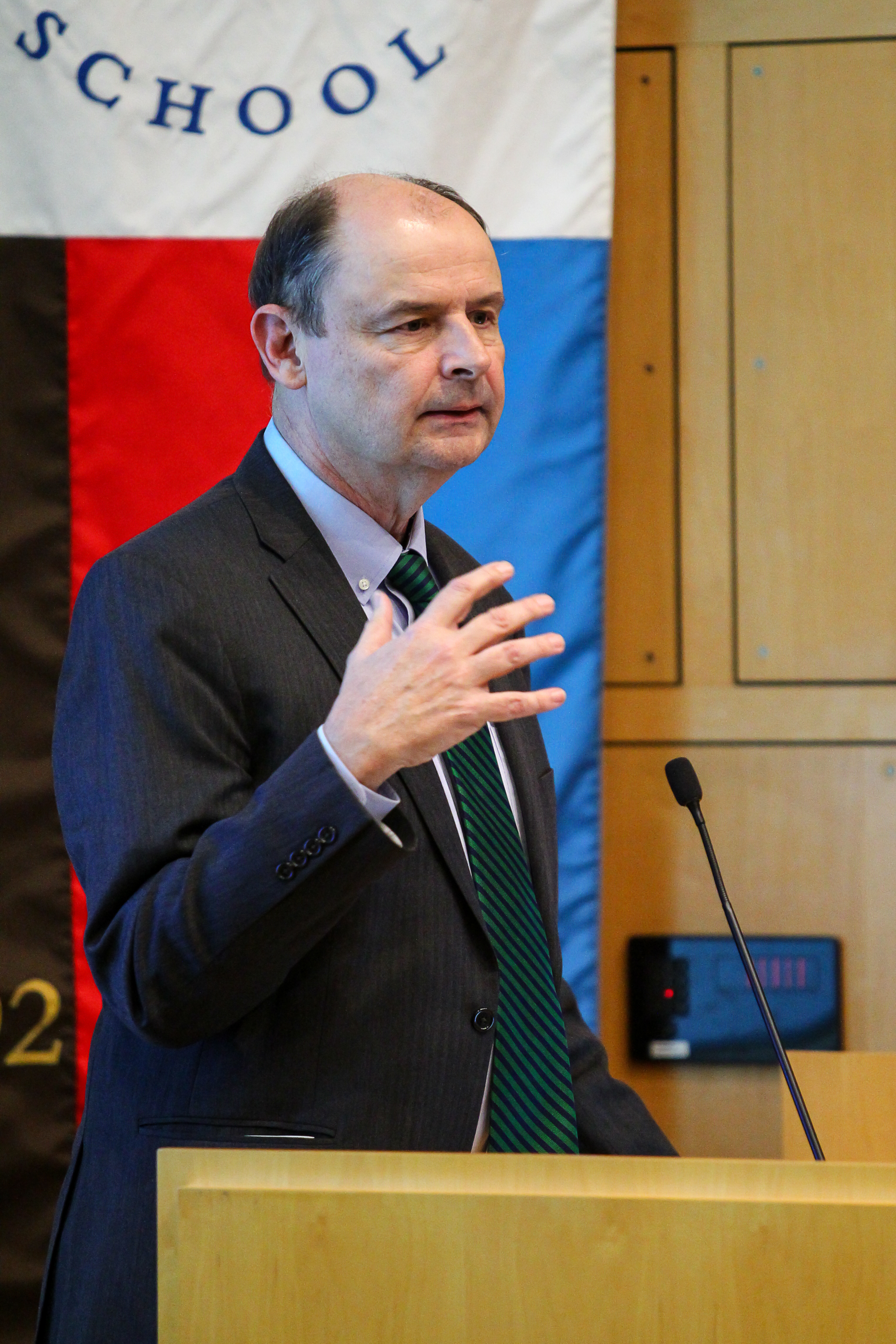
Thomas A. Burke, PhD, MPH is the Jacob I. and Irene B. Fabrikant Professor and Chair in Health Risk and Society and the Director, Risk Sciences and Public Policy Institute, Johns Hopkins Bloomberg School of Public Health. He is also a former EPA Science Advisor and Deputy Assistant Administrator for Research and Development.
On Tuesday, January 30th, 2018 the Bloustein School hosted ‘Adapting to Change: Environmental Science and Policy in the Time of Trump’ presented by Thomas A. Burke, PhD, MPH. The goal of the talk was to examine the challenges to environmental science and policy in this time of change. The Governor James J. Florio Special Events Forum was filled to capacity with Bloustein and Rutgers students, staff and faculty, as well as many members of local New Jersey communities.
Michael Greenberg, distinguished professor and interim dean of the Bloustein School welcomed guests and reminded everyone about the power that a small group of smart and very dedicated people can have. He shared stories about the influential cancer research work that Dr. Burke and his colleagues did in the early 70’s as New Jersey and the rest of the country pushed for important changes to the environmental regulations.
Transitioning into his own presentation, Dr. Burke gave insight into his experience with the EPA as the Assistant Administrator for Research and Development under President Obama from 2015 to 2017. Guests heard a strong call to action to support a foundation of science in policy making as we continue to see problems like: the Flint water crisis, wildfires out west, and oil spills around the country. Dr. Burke spoke seriously about the need to be able to draw on new techniques, and to integrate different data from multiple disciplines. He looked to the students and professors in the audience to continue to employ new approaches and frameworks to the fields of urban planning and ecosystem, life cycle, and health impact assessments as he believes New Jersey is positioned for National Leadership.