
On Monday, December 15, 2025, the New Jersey Target Zero Commission officially adopted the first New Jersey Target Zero Action Plan, reaching a major milestone in the State’s goal to eliminate all roadway fatalities and serious injuries in the state by 2040. The New Jersey Target Zero Action Plan is now publicly accessible via the New Jersey Department of Transportation’s Target Zero Webpage.
Bill Signed in January 2025
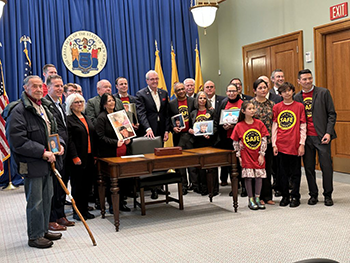
In January 2025, Governor Phil Murphy signed the Target Zero Commission Law establishing the New Jersey Target Zero Commission with the goal of eliminating traffic fatalities and serious injuries on New Jersey’s roads by 2040.
In January 2025, Governor Phil Murphy signed P.L. 2024, c.109 into law, signifying the state’s commitment to eliminating traffic fatalities and serious injuries by 2040 through the implementation of a Target Zero Action Plan. This legislation established the Target Zero Commission, comprising representatives from 13 state and regional agencies, and chaired by the Commissioner of Transportation. The Alan M. Voorhees Transportation Center (VTC) at Rutgers University was selected to assist the Commission’s ambitious efforts to draft and adopt the comprehensive statewide action plan before the end of 2025.
A Plan to Save Lives
In a press release announcing the official adoption of the Action Plan, Governor Murphy remarked, “Over the past year, the Commission has listened to the public and followed the data to develop this plan, and I am grateful for this collaborative effort between government, stakeholders, advocates, and everyday New Jerseyans who use our roads. This clear and comprehensive approach can save lives and lead to policies that demonstrate our commitment to making our roads safer for all.”
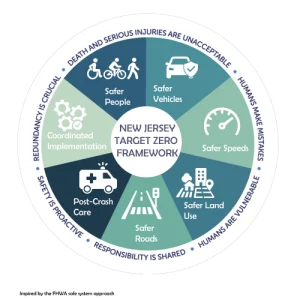
The New Jersey Target Zero Framework
An Expanded Safe System Approach Framework
The Action Plan, which is guided by the Federal Highway Administration’s Safe System Approach, presents 72 Actions, 40 of which are non-legislative, and 32 that have legislative components. Each proposed action aligns with at least one of the seven objectives in the New Jersey Target Zero Framework. The framework includes the Safe System categories and related objectives: Safer People, Safer Roads, Safer Speeds, Safer Vehicles, Post-Crash Care, Safer Land Use, and Coordinated Implementation. The Safe System Approach recognizes that no single measure can eliminate roadway deaths alone; instead, it requires a collaborative, comprehensive strategy to reduce both the likelihood and severity of crashes. A lead oversight agency has been assigned to each non-legislative action, and many actions also identify support agencies and additional partners who will help advance the action’s implementation.
Target Zero Working Group
To guide the development of the Action Plan, VTC formed a collaborative working group comprising Commission members, policymakers, engineers, planners, advocates, law enforcement, academic institutions, local leaders, subject-matter experts, and members of the public. In addition to the 40 non-legislative actions, the working group recommended 32 actions that would require changes to State law. While the Target Zero Commission does not specifically endorse or advocate any specific legislation, it supports their inclusion in the plan.
The Action Plan’s development required an eight-month-long process of research, collaboration, and public engagement. VTC facilitated six monthly meetings of the Target Zero Working Group between April and September. During these meetings, the Working Group reviewed existing programs, developed and prioritized actionable recommendations, and informed the Target Zero Action Plan’s content and structure. Throughout this process, draft actions were posted on the TZC Working Group website, offering various methods for providing both written and verbal feedback on the content of the plan.
After refining these actions, the VTC conducted prioritization exercises with the Working Group to evaluate each action and its associated recommendations, based on its potential impact, feasibility, and alignment with the state’s goal of eliminating traffic-related fatalities and serious injuries by 2040. This collaborative process strengthened the Action Plan and ensured it reflects the perspectives of both technical experts and the communities it is designed to protect. The Commission reviewed and further refined the prioritized list of actions before releasing an official draft of the Action Plan for public comment in November. Following the November and December public meetings, additional comments were incorporated, ensuring the final Action Plan was responsive to community input as well as expert guidance.
Next Steps
With the Action Plan published, the Target Zero Commission recommends that first-year implementation efforts focus on the following eight initial action items:
- A.4. Enhancing DWI Testing and Oversight Capacity (Safer People)
- A.6. Increased Use of Pedestrian-Oriented Safety Countermeasures (Safer People)
- A.9. Seatbelt Use Outreach (Safer People)
- A.10. Unified Education Strategy for Target Zero (Safer People)
- B.1. Bus Stop Design and Safety Improvements (Safer Roads)
- C.2. Traffic Calming (Safer Speeds)
- F.2. Updates to the Residential Site Improvement Standards (Safer Land Use)
- G.7. Target Overburdened Communities (Coordinated Implementation)
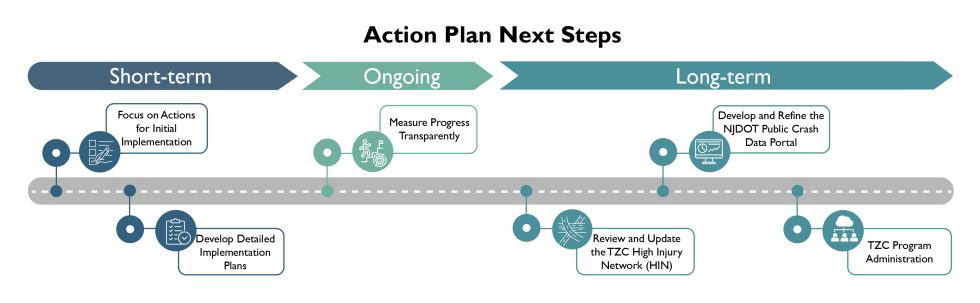
The Target Zero Commission’s Next Steps
High Injury Network and Public Crash Data Portal
The Target Zero Commission will strengthen safety efforts by updating the statewide High Injury Network (HIN), a data-driven map that identifies roads with the highest concentrations of traffic fatalities and serious injuries. This ensures identified locations have proactive, systemic changes to infrastructure and policy that can save lives. At the same time, NJDOT will launch a public Crash Data Portal, giving the public access to information on all roadway crashes.
The Target Zero Action Plan is an important step toward a safer future on New Jersey’s roads. Putting strategies into action will mean refining initiatives, securing resources, and building strong partnerships. Most importantly, success depends on recognizing that we are all in this together as we work to prevent future tragedies. For more information and to download the plan, visit dot.nj.gov/targetzero.