
The Increasing Enrollment of Paid Family Leave for Parents in the U.S.
Over the past 10 years, many U.S. states have implemented mandatory paid family leave policies to help address the lack of such policy on the national level. In this post, we examine how paid family leave enrollment among parents in the U.S. has changed.
We use data from the Survey of Income and Program Participation (SIPP), a nationally representative longitudinal survey from the U.S. Census Bureau that provides comprehensive information on the dynamics of income, employment, household composition, and government program participation. We use data from 2024, including parents aged 15-64 who had a first-born child born between 2000 and 2024 and who worked at some point during the pregnancy leading up to the birth of that child.
First, we examine trends in the percentage of fathers and mothers who took paid leave after their child was born (Figure 1). Overall enrollment of paid leave (which includes maternity/paternity leave, sick leave, and vacation leave) increased for both mothers and fathers between 2000 and 2024, from 29% to 58% for fathers and from 47% to 54% for mothers. For mothers, the most common channel for paid leave is family leave, while for fathers, both family leave and vacation leave are common. We also find that over this time period, paid parental leave has become more common for fathers, compared to vacation leave.
Next, we examine how enrollment changed in states that passed mandatory family paid leave policies. Since California implemented its program in 2004, 14 additional states (including DC) have passed or implemented mandatory paid family leave policies and programs. Among these states, we calculate enrollment rates in the period before implementation and the period after implementation (we note that in four of these states the policies are yet to be fully implemented and so are only represented in the before statistics). Figure 2 shows the results. For fathers, the passing of paid family leave shifts the channel of leave to family leave but does not change the overall enrollment rate of paid leave. However, for mothers, paid family leave increases both the total enrollment rate and the rate of enrollment of family leave.
These analyses are descriptive, but they tell a clear story: the enrollment of paid family leave is increasing for both fathers and mothers, and parents are more likely to take paid family leave when a mandatory paid family leave policy is available. Given the benefits of paid leave on mental health, these findings suggest mandatory state-level paid leave policies may have important impacts.
Figure 1. Percentage of parents who report taking paid leave after birth of first child, 2000-2024
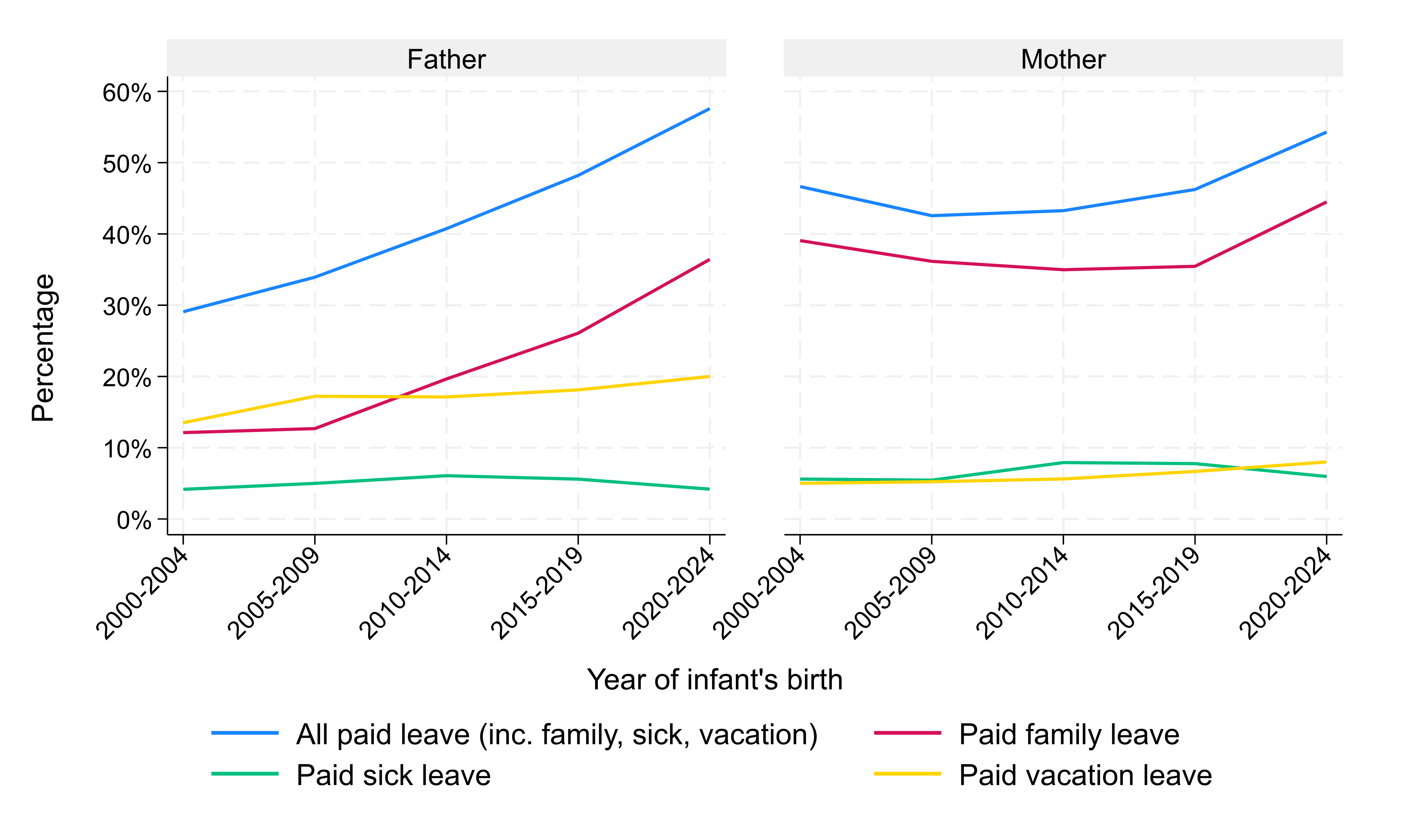
Source: 2024 SIPP. Notes: Includes parents aged 15-64 who reported working in the period of pregnancy leading up to birth of their child.
Figure 2. Percentage of parents who report taking paid leave after birth of first child, before and after implementation of mandatory state-level paid family leave policy
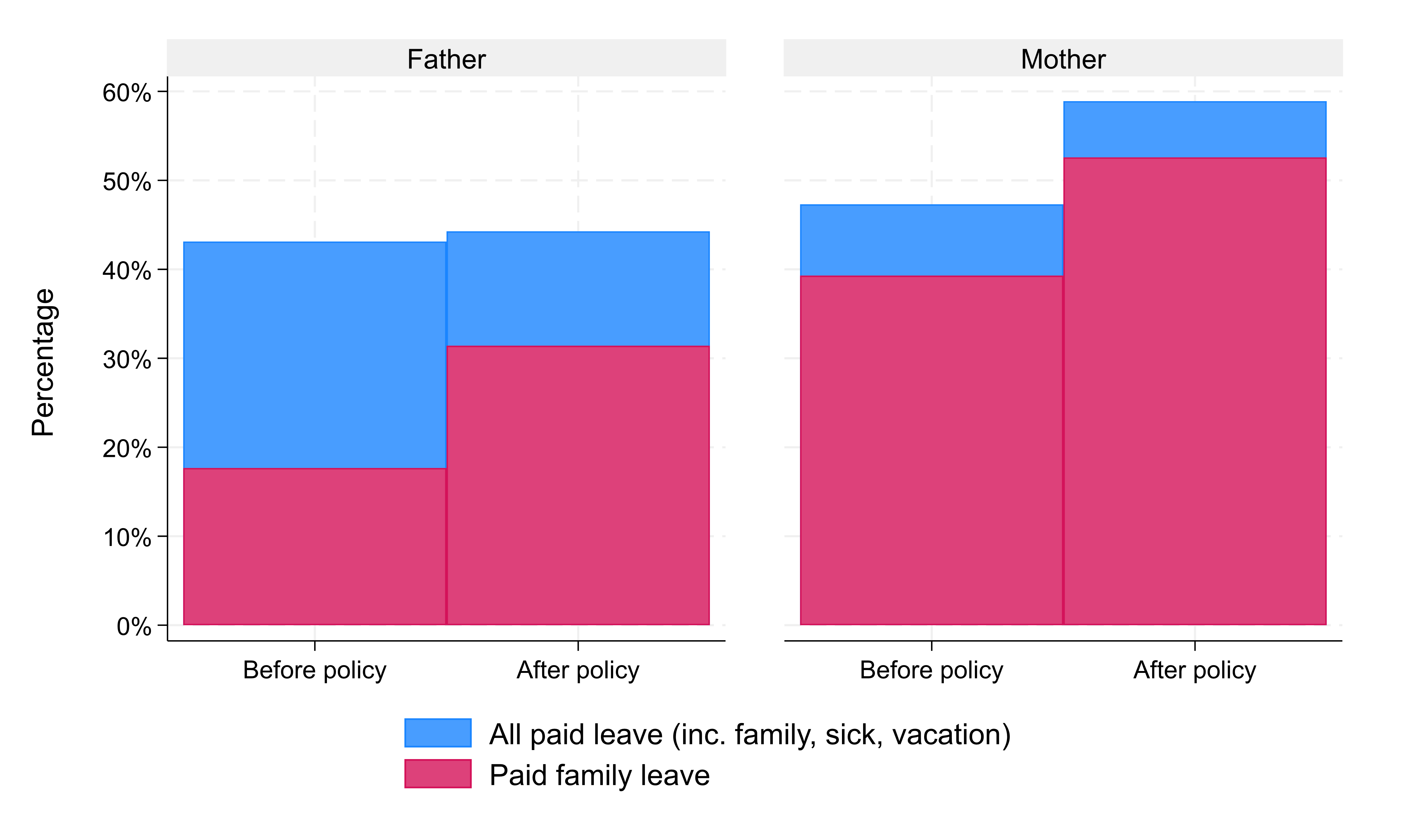
Source: 2024 SIPP. Notes: Includes parents aged 15-64 who reported working in the period of pregnancy leading up to birth of their child in the 15 states which implemented paid family leave policies.